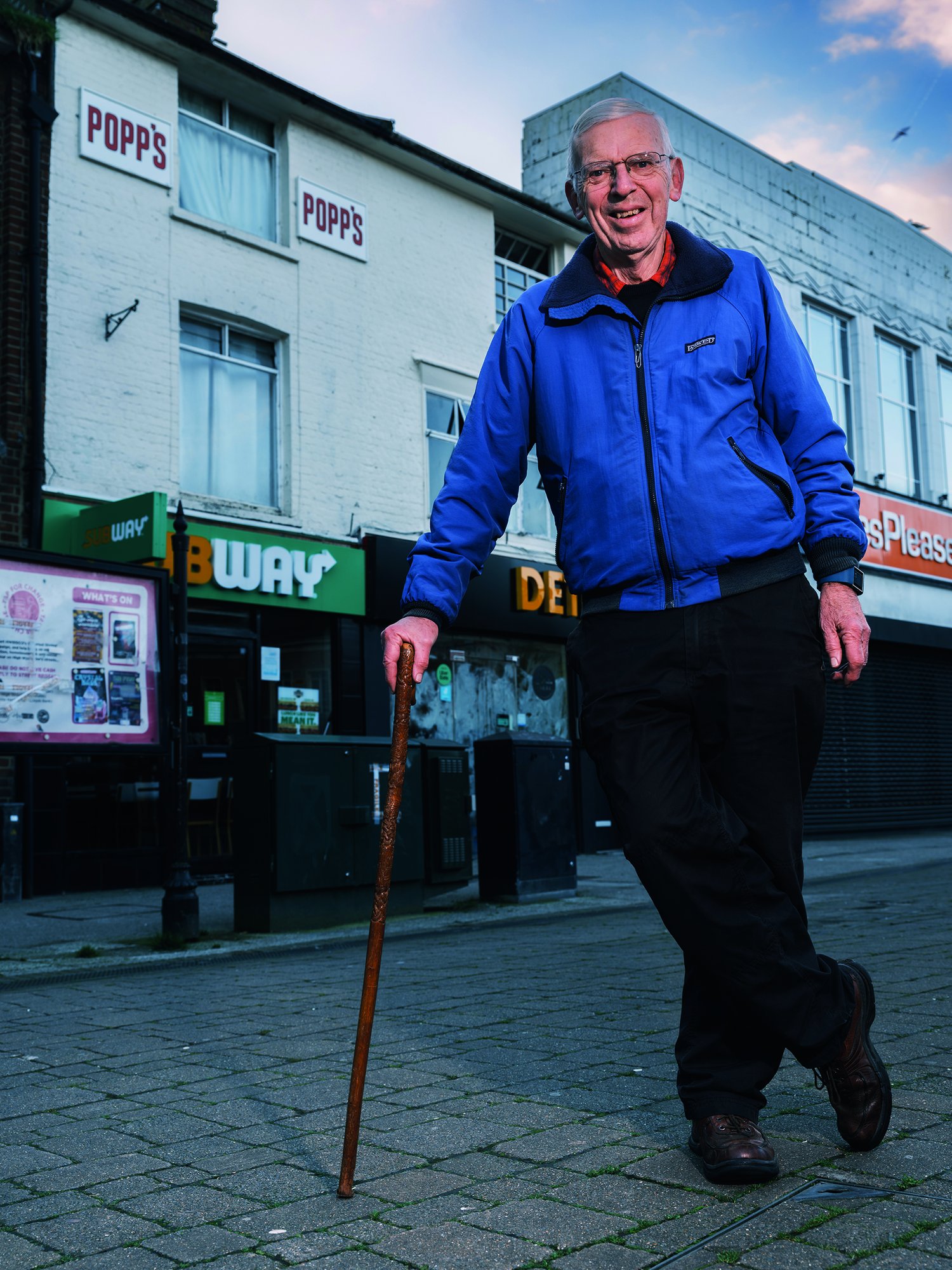
Willie Reid has lived here since 1982. He found the town so fascinating that he undertook extensive library research and created his ever-popular walking tours. If you need someone to change your perception of Wycombe, Willie’s your man.
Willie’s favourite snippet is the story of William Petty, who won the parliamentary seat in Wycombe only for his father to die the next day. On inheriting the title, he was immediately moved to the House of Lords. He was Prime Minister for nine months from 1782 to 1783 and helped negotiate the ‘Peace of Paris’ Treaty which recognised American independence.
He says: “My favourite part is when people come up afterwards and say: ‘I’ll never look at Wycombe the same way again.’ Relating the history, seeing them listening and people asking questions. That’s really what makes it all worthwhile.”
Join a tour www.walkingwycombewithwillie.co.uk
Any donations for the walks go to Street Kids Direct, a charity in Guatemala that helps keep children off the streets in the capital, Guatemala City.
Learn more about William Petty and see his portrait at Wycombe Museum.
Popp’s signage
Meander into Frogmoor and head for Subway – but it’s not sandwiches we’re here for. Above the listed shop two red signs read ‘Popp’s’, commemorating an audacious criminal whose newsagents was here in the early 1900s.
Jacob Ivanovitch Popp was born in Russia in 1873 and emigrated to England, settling in High Wycombe where he was arrested every single week for eight years, for opening his shop on a Sunday, a heinous crime that had him brought before a court and fined.
Popp was arrested not once, not 20 times, but over 450 times. He used this for commercial benefit as his shop attracted huge attention from people curious to see Wycombe’s serial criminal. He was even featured in the New York Times on March 8th, 1908, which claimed he made over $100 every Sunday, about £2,636.58 in today’s money.
In 1914, once the war started, Popp hung up his criminal boots and turned to the constabulary, volunteering for special patrols “in the event of a raid by hostile aircraft”. He moved to 8 Castle Street with his family. He died aged 65, and requested that nobody wear mourning clothes to his funeral.